Creating an outdoor patio is an exciting venture that can transform your backyard into a peaceful retreat or a lively social hub. However, the importance of choosing the right patio design for your specific climate conditions cannot be overstated. The climate you live in dictates not only the materials best suited for your patio but also how it should be constructed for durability and comfort. A patio that stands up to the elements will offer many years of enjoyment and increase the value of your property. Therefore, understanding your climate and its implications for patio design is a crucial step in the planning process.
How Does Climate Affect Patio Material Selection?
When selecting materials for your patio, climate plays a pivotal role in determining durability and maintenance needs. In regions prone to heavy rainfall or extreme weather conditions, opting for non-porous materials like sealed concrete or treated wood can prevent weather-related damage to outdoor patios. These materials also reduce water absorption, which helps in preventing cracking and erosion. For chilly climates, consider materials like brick or pavers that hold up well under freezing temperatures and are less likely to heave under frost action. Additionally, homeowners in hot, sunny regions should favor lighter-colored, heat-resistant materials such as limestone or travertine, which stay cooler under the sun.
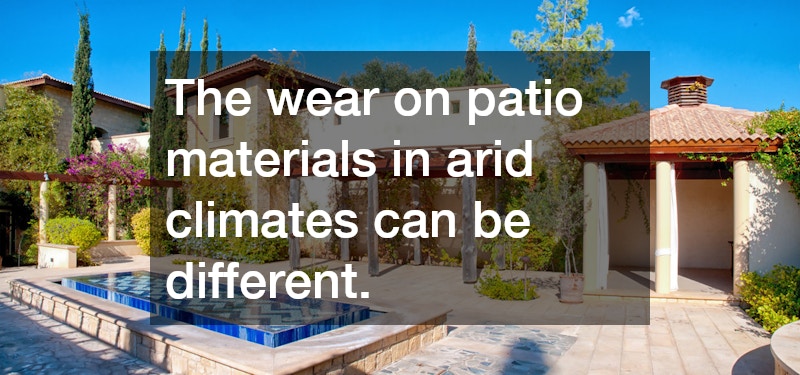
The wear on patio materials in arid climates can be different, as constant sun exposure might fade colors and cause some materials to become brittle over time. Thus, UV-resistant sealants can extend the life of wooden patios, while composite decking offers a low-maintenance solution that stands up to the sun’s harsh rays. Similarly, metal fixtures like railings should be coated with a protective layer to prevent rust and ensure longevity. Sweltering hot climates might require advanced solutions like heat-dissipating tiles, which can lower temperatures underfoot significantly. By selecting materials based on the climate specifics of your area, you ensure your patio’s resilience and functionality over years of changing weather patterns.
What Design Features are Best for My Climate?
Beyond material selection, incorporating climate-appropriate design features can significantly enhance your patio’s usability and comfort. If you experience high levels of sunlight, installing a retractable awning or pergola can provide necessary shade, regulating temperature and sunlight exposure. Regions with frequent rain can benefit from angled roofing to drain water effectively, protecting the integrity of the patio surface below. Incorporating windbreaks, such as trellises or latticework, can mitigate strong winds in open, breezy terrains. For snow-prone areas, structures with strong, sloped roofs can help prevent snow accumulation while ensuring durability and safety.
Enclosure options like removable screens or transparent covers can extend patio usability into cooler months, creating a flexible outdoor space that adapts to seasonal changes. Adjustable screens, for instance, allow for ventilation while keeping pests at bay during warmer months. In contrast, sloping designs with clear roofs can capture sunlight, providing natural warmth without compromising the view in colder weather. Additional features like built-in heaters or fireplaces also create cozy atmospheres, enabling year-round enjoyment regardless of temperature fluctuations. When thoughtfully planned, these design considerations align your patio use with the climatic rhythms of your area.
How to Maintain an Outdoor Patio Based on Climate?
Maintaining your patio in different climates requires a tailored approach to protect your investment and ensure lasting enjoyment. In areas with heavy snowfall, regular removal is essential to prevent structural stress or material damage; using a plastic shovel can protect delicate surfaces. Similarly, regions with intense sun exposure necessitate frequent sealing and staining of wooden fixtures to avoid cracks and fading. Proper drainage should also be a priority in wet climates to prevent pooling and subsequent damage to foundations and materials. Ventilated covers or breathable tarps may also be employed to protect the patio during off-seasons or inclement weather, preserving your spaces’ pristine condition.
Opting for a low-maintenance garden or rockery, especially in arid environments, can further reduce upkeep while adding aesthetic value. For instance, the addition of succulents and drought-tolerant plants can bolster resilience against water shortages, embedding natural beauty that complements your patio setting. Regular sweeping and debris removal serves as a simple, effective measure across all climates, preventing mold, pest infestations, and decomposition-related stains. Installing a power tap might also aid in cleaning access, enhancing ease of maintenance as per regional specifics. A well-equilibrated maintenance plan adapts to climatic nuances, fostering a lush, functional, and enduring environment.
Installing an outdoor patio requires an in-depth understanding of your local climate to ensure a harmonious and sustainable design. Material selection plays a critical role, with choices that embrace functionality and weather resilience forming the foundation of a successful outdoor space. Likewise, design features and maintenance plans tailored to specific climatic variables further enhance the patio’s longevity and day-to-day pleasures. With personalized considerations and a proactive care regimen, your patio can thrive as a sanctuary suited perfectly to your environment. Ultimately, the greatest benefits arise from harmonizing design and nature, crafting a functional and enjoyable outdoor living space that reflects the beauty and challenges of your unique setting.